

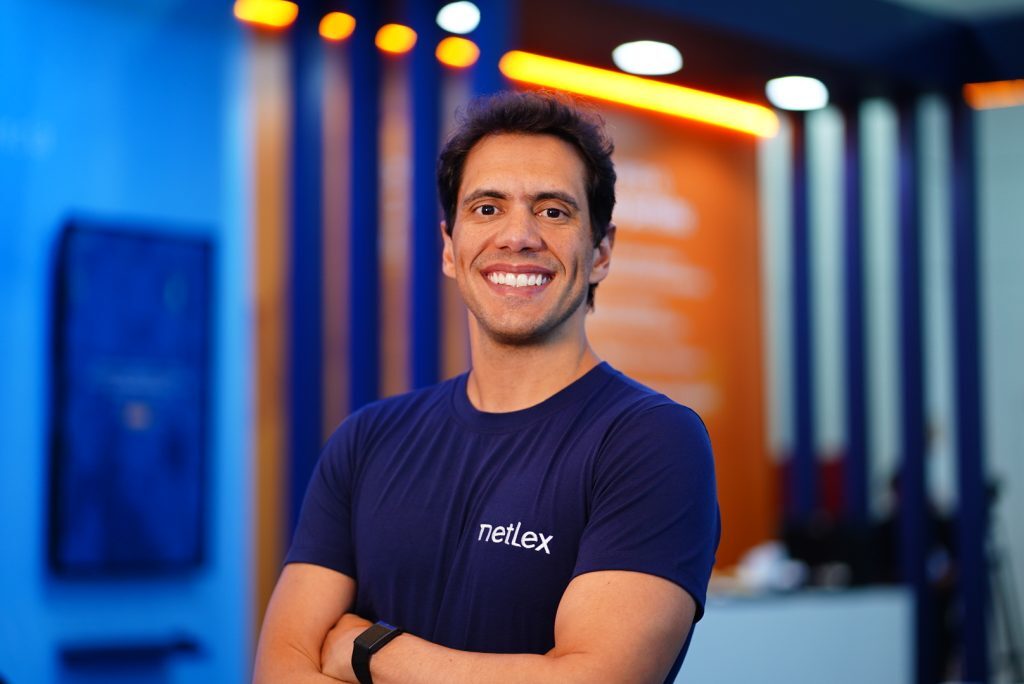
 netLex Vision
73% reduction in contract processing and signature time (from 30 to 8 days)

To reach the results we harvest today, it took meticulous work to customize the platform to our needs, and that became easier with the support of the netLex team, who helped us proactively in building the flows and templates.”
About DUX Company
DUX Company works in advanced human health and nutrition, with a diversified product portfolio and several sales channels. Its rapid growth — doubling in size every year — created rising demand for more efficient tools and processes, especially in legal.
DUX's legal team, though lean, is highly strategic and works on three main fronts: advisory, contracts and litigation. Given the growing volume of demands, the need for an efficient solution like netLex became even clearer. The platform allowed the team to manage the complexity and the large volume of contracts quickly and in an organized way, without holding back the company's growth.
After implementing netLex, we had a 67% gain in the effectiveness of our work. That let us focus on what really affects the success of the business. Automation does not replace the work, but it allowed us to do it in a more strategic and refined way.”
Key points
- A 73% reduction in contract processing and signature time (from 30 to 8 days)
- A 77% reduction in legal's response SLA (from 3 to 1 day)
- A 50% reduction in the team dedicated to contract management, freeing resource for more strategic work (from 2 to 1 person)
- Greater security and compliance
Growing volume across disconnected tools
Before implementing netLex, DUX's legal team handled an average of 50 contracts a month, coming from clients, suppliers and other areas of the company. Given the volume and the absence of a standardized, automated flow, the team struggled to classify which demands were urgent, which areas generated the most requests and which topics recurred most. That affected efficiency in document analysis and made it impossible to measure the team's work..
The team also used several tools to manage those contracts: Asana to organize demands, Google Drive as a repository and Zendesk for queries and the interface with other teams, on top of sharing drafts — and their many versions — across corporate channels such as email and chat. That use of multiple platforms made the process operationally inefficient and made compliance harder to meet.
Often it was impossible to determine which version of a document was actually current, which created confusion and rework. As Caio Pereira, Legal & Compliance Manager at DUX, describes it: “when sharing a Google Drive link with a supplier, it was common for them to send back the previous version in Word by email, creating uncertainty about which version was correct and increasing the risk of errors in the process.”
Main problems identified
- No control or visibility over contracts: ifficulty classifying, storing and managing documents, resulting in slow analysis of status, term and key information
- Difficulty measuring SLAs and prioritizing demands: difficulty monitoring response and execution deadlines for legal demands
- Use of multiple disconnected tools: duplicated information and uncertainty about the correct version, increasing the risk of errors and compliance violations and hurting productivity
- No data traceability: manual management consumes time and limits visibility for fast decisions
These challenges resulted in a less strategic legal operation, overloading the team with repetitive operational tasks and hindering data-based decision-making. The absence of centralized management directly affected process predictability and the company's legal security, increasing the risk of non-compliance.
Even though we were always very committed to our SLA, because demands arrived very spread out and through several channels, that compromised our organization, made it harder to prioritize what was urgent and affected the quality of our service.”
The solution implemented
To face those challenges, DUX structured and automated three main flows:
- Standardized document management: designed for recurring contracts and documents that do not require customization, such as confidentiality agreements and simple amendments. With standardization inside netLex, areas outside legal began generating documents directly on the platform, using templates pre-approved by Legal. That eliminated the need for multiple tools, reduced rework, gave the other areas more autonomy and ensured every version is centralized and current in a single place.
- Non-standardized contract management: built for more complex contracts that require individual legal analysis, involve specific negotiations and variable risks. With the new structure, the whole flow was centralized on the platform. The legal team takes an active part in negotiating contracts sent by suppliers, recording notes on risk allocation directly in the system and ensuring all parties work on the most current version of the document.
- Queries to the legal team: created to centralize and record queries from other areas, previously made by email, WhatsApp or verbally. With the new process, queries are recorded centrally, guaranteeing traceability and control. That made it possible to set response SLAs, measure performance and ensure every area gets a structured, fast answer.
We chose netLex because, unlike other CLM solutions on the market, the platform adapts flexibly to our needs, allowing customization without compromising the standardization that guarantees efficiency and security. We did not have to mold ourselves to the system; netLex brought the customization we needed inside an organized, scalable flow.”
Results and impact
Implementing netLex transformed contract management at DUX Company, bringing significant gains in efficiency, security and speed:
- A 73% reduction in contract processing and signature time: faster, more efficient processes;
- Legal team SLA reduced by 77%: faster service and effective support for internal areas;
- Greater security and compliance: centralized legal requests, guaranteeing control over documents and current versions;
- Optimized resources: one of the team's professionals freed to work on strategic initiatives, increasing the legal department's analytical capacity.
Conclusion
Before netLex, DUX's legal team faced operational challenges that compromised its efficiency and its strategy. High contract volume, decentralized demands and the use of multiple tools created rework, a lack of traceability and difficulty prioritizing. That meant slow processes, risk of errors and a team overloaded with operational tasks. The absence of a centralized system also prevented the analysis of structured data.
With netLex, DUX Company transformed its contract management, making it traceable, measurable and efficient. The legal team structured and automated workflows, cutting contract processing and signature time by more than 70% and allowing the team to focus on strategic activities that genuinely add value to the business. Centralizing information also enabled the collection and analysis of essential data, giving visibility into contract volume, SLAs and demand patterns.
The result is a legal operation that is faster, smarter and aligned with the company's accelerated growth. As the team puts it: “bringing a CLM like netLex to DUX was certainly one of the most revolutionary things for our department. Today, beyond all the productivity gains, the team has sharper control of the contracts the company signs, which allows greater precision in recurring audit reports and guarantees more security in contract management as a whole.” — Silas Martins, Senior Attorney at DUX.